Nazar Utar Puja: Meaning, Rituals & How to Book It Online
Published Jul 1st, 2026There's a certain kind of bad luck that doesn't feel random. A child who won't stop crying for no clear reason. A business that was doing fine until suddenly it wasn't. A string of small accidents that feels like more than coincidence. In many Indian households, this pattern has a name: nazar, or the evil eye.
Nazar Utar Puja is the ritual response to this belief a practice passed down through generations to counter the effects of envious or negative glances, whether intentional or not. It's one of those traditions that sits quietly in the background of everyday life until something feels "off," and then suddenly it becomes the first thing families turn to.
What keeps this ritual relevant today isn't superstition alone. It's the comfort of an established practice, a way to reset a household's energy and restore a sense of control when things feel chaotic. Even in a world of medical explanations and rational planning, many families still light a lamp, chant a mantra, and wave a few red chilies in a circle before letting go of the worry.
What is Nazar Utar Puja?
The word "nazar" comes from Persian and Urdu roots meaning "gaze" or "sight," and in Hindu tradition it refers specifically to a harmful gaze one carrying jealousy, envy, or ill will, even if unintentional. "Utarna" means to remove or take off, so Nazar Utar Puja translates loosely to "the ritual of removing the evil eye."
Spiritually, the belief rests on the idea that intense emotion, whether admiration or envy, carries energy. When directed at someone experiencing good fortune — a new baby, a new home, sudden success — that energy is thought to attach itself and create imbalance. The puja doesn't claim to reverse fate. Instead, it's understood as a cleansing act, restoring emotional and spiritual equilibrium so a person or family can move forward without that lingering unease.
Its importance in Hindu households lies in this: it's a low-barrier, widely accessible way for ordinary people to reclaim peace of mind, distinct from more elaborate havans or planetary remedies.
History and Origin of Nazar Utar Puja
Belief in the evil eye isn't unique to India. Cultures across the Mediterranean, the Middle East, and South Asia have parallel traditions, which suggests the concept taps into something universally human the discomfort of being watched, envied, or singled out.
Within Hindu tradition, references to malevolent gazes and protective countermeasures appear across folk practices and regional customs rather than one single scripture. Various Puranic stories touch on the power of drishti (sight) and its ability to influence fortune, and practices like tying black threads on children, hanging lemon-chili totems outside homes, or performing aarti with mustard seeds have circulated for generations as informal, home-based versions of nazar removal.
Over time, this informal folk practice evolved into a more structured puja, performed by pandits with proper mantras and a defined ritual sequence, especially for cases considered more persistent or severe. Its popularity endures because it addresses something practical: the human need to explain and undo a run of bad luck.
What Causes Nazar Dosh?
According to traditional belief, several factors are thought to invite or cause nazar dosh:
-
Jealousy from others over one's success, beauty, wealth, or happiness
-
Negative energy absorbed from crowded or emotionally charged environments
-
Envy, even when unspoken or unintentional
-
Sudden attention or admiration, particularly toward children or new achievements
-
Spiritual imbalance, where a person's own aura is considered weakened or vulnerable
It's worth noting these are traditional explanations passed down through cultural belief rather than scientifically verified causes.
Signs That May Indicate Nazar Dosh
Families often look to certain patterns as traditional indicators of nazar dosh:
-
Frequent, unexplained obstacles in work or personal life
-
Sudden illness with no clear medical cause
-
Unexpected business losses or financial setbacks
-
Recurring family conflicts or tension
-
A child crying persistently without apparent reason
-
A general lack of peace or restlessness at home
-
Repeated failures despite genuine effort and planning
These signs are widely recognized within belief systems around the evil eye, though they are not medical or diagnostic indicators many families consult a knowledgeable priest to understand whether a puja is appropriate for their specific situation.
Benefits of Nazar Utar Puja
Those who perform this ritual often associate it with:
-
Protection from negative energy and ill-intentioned glances
-
Greater mental peace and reduced anxiety
-
Improved family harmony
-
A sense of spiritual cleansing and renewal
-
Increased positivity in daily life
-
Better focus and clarity in work or studies
-
Emotional balance during stressful periods
-
Added protection for young children, who are considered especially vulnerable
-
Support for prosperity and steady progress
-
Restored inner confidence after a difficult phase
Types of Nazar Utar Puja
Depending on who or what needs protection, this puja can take different forms:
|
Type |
Typically Performed For |
|
Individual Nazar Utar Puja |
A single person facing repeated setbacks |
|
Family Nazar Puja |
Entire household experiencing conflict or bad luck |
|
Child Protection Puja |
Infants and young children |
|
Business Nazar Removal Puja |
Shops, offices, or new ventures facing losses |
|
Vehicle Nazar Puja |
New vehicles, especially after purchase |
|
Home Protection Puja |
New homes or spaces feeling "heavy" or unsettled |
|
Festival Nazar Puja |
Performed during specific festivals as a precaution |
When Should You Perform Nazar Utar Puja?
There isn't a single mandatory date for this ritual — it's largely need-based. That said, families commonly perform it:
-
On astrologically auspicious days recommended by a pandit
-
Immediately after noticing recurring signs of distress or bad luck
-
During specific festivals associated with protection and cleansing
-
After moving into a new home
-
Before or after launching a new business
-
Ahead of major life events like weddings, exams, or travel
Because timing and intensity of the ritual can vary by situation, consulting a knowledgeable priest beforehand helps determine whether a simple home remedy or a fuller puja is appropriate.
Step-by-Step Nazar Utar Puja Procedure
While specifics vary by region and pandit, the general structure includes:
-
Sankalp (Vow): The devotee states their intention and reason for performing the puja
-
Ganesh Puja: Lord Ganesha is invoked first to clear obstacles
-
Kalash Sthapana: A sacred pot is set up to represent divine presence
-
Main Rituals: Symbolic items such as mustard seeds, red chilies, or salt are circled around the affected person or space
-
Mantra Chanting: Specific protective mantras are recited by the pandit
-
Offerings: Flowers, turmeric, and other items are offered to the deity
-
Aarti: A lamp-lit prayer is performed to seal the cleansing
-
Prayers for Protection: Closing prayers ask for ongoing protection from future negative energy
-
Prasad Distribution: Blessed offerings are shared among those present
Puja Samagri Required
|
Item |
Purpose |
|
Mustard seeds (rai) |
Traditionally used to absorb and remove negative energy |
|
Dried red chilies |
Burned or circled as part of the cleansing ritual |
|
Rock salt |
Used in purification rituals |
|
Turmeric and kumkum |
Offered to the deity and used for tilak |
|
Camphor |
Burned during aarti for purification |
|
Lemon |
Symbolic item in some regional variations |
|
Black thread or cloth |
Used for protective tying, especially for children |
|
Incense sticks and lamp (diya) |
For aarti and ambiance |
|
Flowers |
Offered during the main ritual |
|
Idol or image of the presiding deity |
Central focus of worship |
Most online puja providers arrange this samagri on your behalf, which removes the hassle of sourcing individual items.
Who Can Perform Nazar Utar Puja?
This ritual is broadly accessible:
-
Individuals dealing with a personal streak of bad luck or stress
-
Families seeking to restore harmony at home
-
Children, usually with a parent or guardian performing the ritual on their behalf
-
Business owners facing unexplained losses or setbacks
-
Anyone seeking general spiritual protection, regardless of the specific trigger
There are no strict eligibility restrictions — sincerity of intent matters more than background or status.
Can You Book Nazar Utar Puja Online?
Yes, and for many families this has become the more practical option. Booking online typically offers:
-
Convenience, since there's no need to search locally for an available, knowledgeable priest
-
Authentic Vedic rituals, performed with correct mantras and sequence rather than shortcuts
-
Qualified priests experienced specifically in protective and cleansing rituals
-
Online participation, letting family members join via video call regardless of location
-
Personalized guidance, tailored to the specific signs or concerns a family is experiencing
-
Easy scheduling, often within days rather than weeks
Platforms like Shubhpuja have built their online puja model around exactly this gap — connecting people who believe in the tradition with pandits who can perform it correctly, even when there's no trusted priest nearby.
Why Choose Shubhpuja?
If you're comparing where to book a Nazar Utar Puja online, a few things are worth considering about a platform before committing:
-
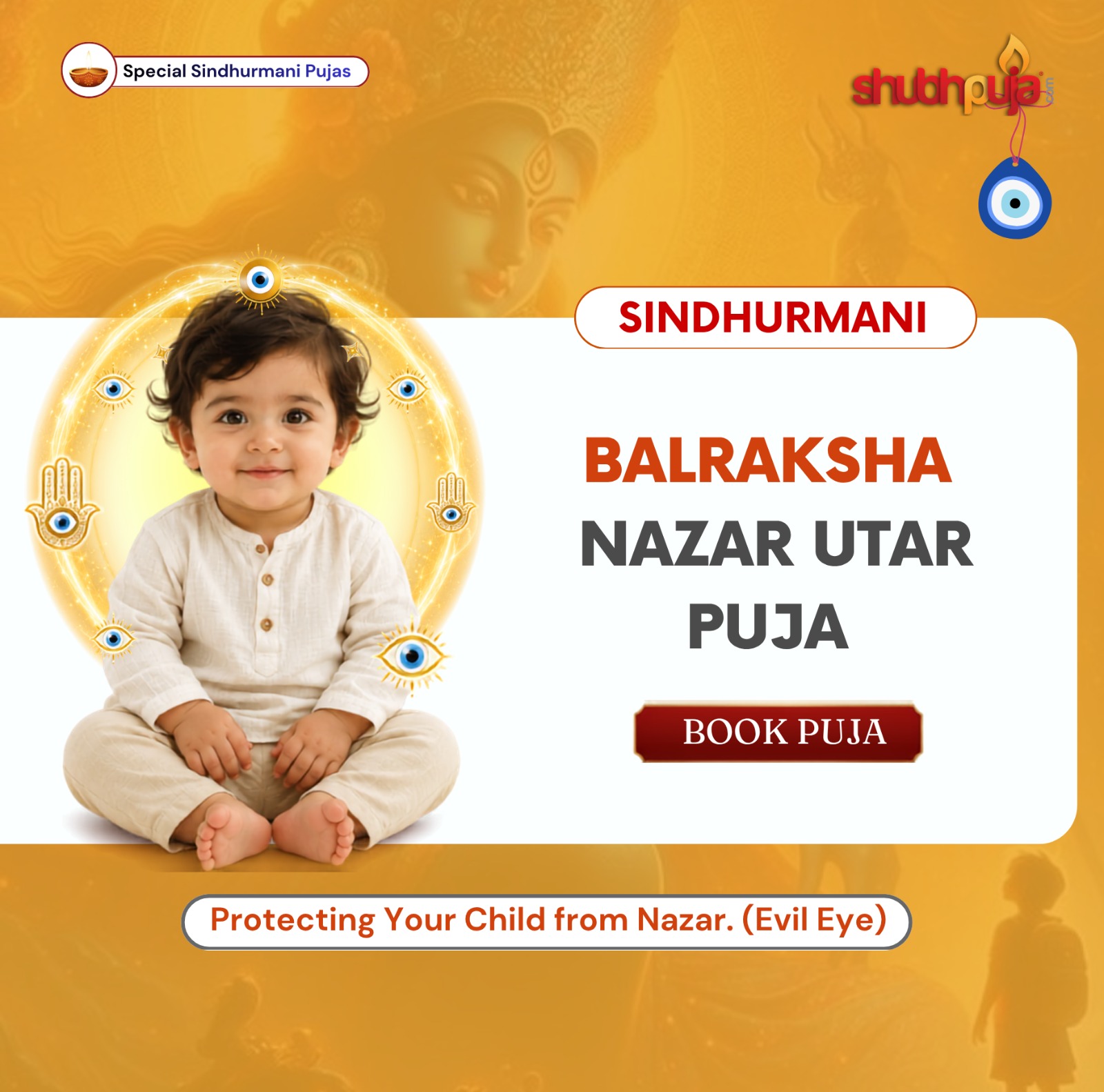
Experienced Vedic pandits who specialize in protective rituals, including dedicated offerings such as their Sindhurmani Nazar Utar Puja for evil eye and negative energy concerns
-
Authentic rituals rooted in traditional procedure rather than generic, one-size-fits-all scripts
-
Online booking convenience, with sessions arranged around your schedule
-
Personalized guidance, including recommendations based on your specific situation
-
Transparent process, so you know what the puja involves before booking
-
Dedicated support, for questions before, during, and after the ritual
-
Reach across India and internationally, useful for families living abroad who still want an authentic priest-led ritual
It's also worth noting, in the interest of transparency, that platforms like Shubhpuja are upfront that puja and astrological remedies are matters of personal faith — outcomes are understood to vary and are not presented as guaranteed or scientifically proven results. That kind of honesty is itself a trust signal worth looking for.
Key Takeaways
-
Nazar Utar Puja is a traditional ritual to remove the believed effects of the evil eye or negative energy
-
It's rooted in longstanding folk and cultural practice rather than a single scripture
-
Common signs people associate with nazar dosh include repeated setbacks, illness, and family tension
-
The puja can be performed for individuals, children, families, homes, vehicles, or businesses
-
It can be booked and performed online with a qualified pandit guiding the process
-
Outcomes are a matter of personal faith and belief, not guaranteed results
Frequently Asked Questions
1. What is Nazar Utar Puja?
It is a Hindu ritual performed to remove the believed negative effects of the evil eye (nazar), using mantras, offerings, and symbolic cleansing performed by a pandit.
2. How does Nazar Utar Puja help?
Traditionally, it's believed to restore spiritual and emotional balance, offering protection from envy-driven negative energy and helping resolve unexplained setbacks.
3. Can Nazar Utar Puja be performed online?
Yes, many platforms now offer online booking, where a qualified pandit performs the ritual and guides family members through the process via video call.
4. How long does the ritual take?
Depending on the type and scale, the puja typically takes 30 minutes to an hour, though more elaborate versions may take longer.
5. Who should perform this puja?
Anyone experiencing repeated bad luck, illness, family conflict, or a general sense of unease can choose to perform it, based on personal belief and consultation with a priest.
6. Is Nazar Utar Puja suitable for children?
Yes, it is commonly performed for infants and young children, usually with a parent or guardian present, since children are considered particularly vulnerable to nazar.
7. What items are required?
Common items include mustard seeds, red chilies, rock salt, turmeric, camphor, and a lamp for aarti, though the exact list can vary by regional practice.
8. How often should this puja be performed?
There's no fixed frequency most families perform it as needed, when they notice recurring signs of distress, or during specific festivals as a precaution.
9. Can it be done at home?
Yes, simpler versions can be performed at home, though a pandit-led puja is recommended for more persistent or serious concerns.
10. How can I book Nazar Utar Puja?
You can book it online through platforms like Shubhpuja, which connect you with experienced Vedic pandits for a guided, authentic ritual.
Conclusion
Nazar Utar Puja endures because it addresses something very human the need to make sense of a rough patch and take an active step toward feeling better. Whether it's a child who won't settle, a business hitting an unexpected slump, or simply a lingering sense of unease, this ritual offers families a structured, faith-based way to reset.
For those who want to perform this ritual with the right mantras, sequence, and guidance, booking an authentic Nazar Utar Puja through Shubhpuja connects you with experienced Vedic priests who can walk you through the process, whether in person or online.